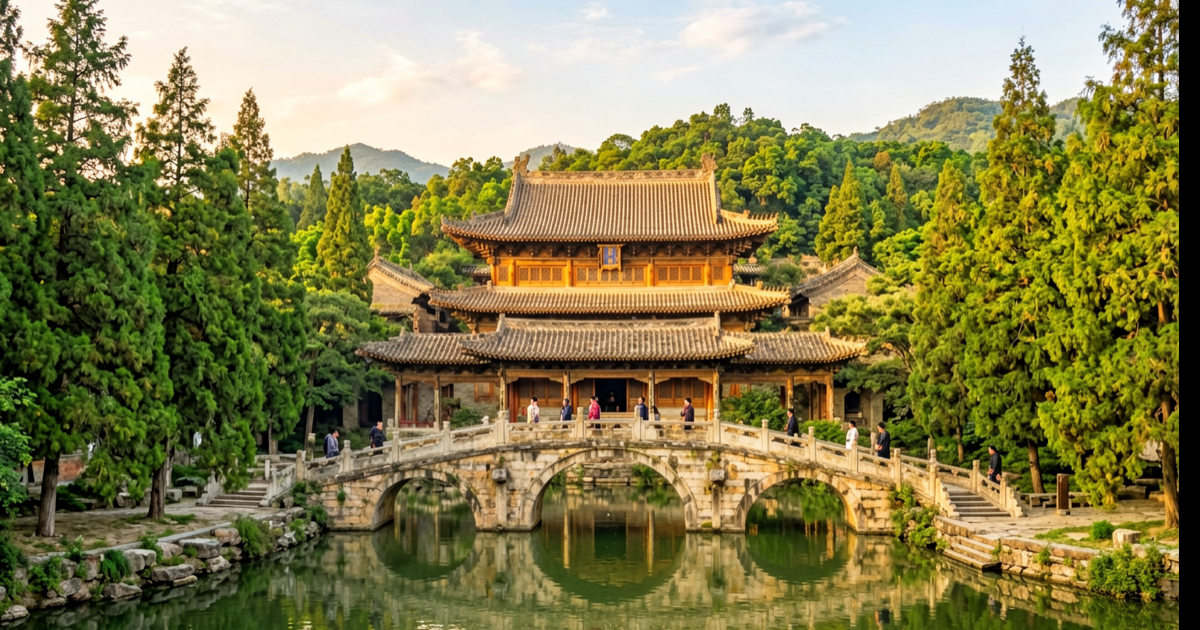
Taiyuan
Shanxi Capital · Jinci Temple · Shanxi Museum · Knife-cut Noodles
Last updated 22 July 2026 · by the Walk Voyage Editorial Team
Visitor data snapshot
What travelers actually experience in Taiyuan
Verified visitor numbers, ratings, and ticket prices from a third-party travel platform. Trip.com international edition (USD pricing), snapshot 2026-08-01 · snapshot 2026-08-01.
5
Bookable attractions
4.65/5
Average rating
33K
Total reviews
2
Free entries
| Top attraction | Rating | Reviews | Ticket (USD) |
|---|---|---|---|
| Jinci Temple Museum | 4.8 | 18,156 | $11.82 |
| Donghu Vinegar Garden | 4.9 | 1,319 | $0.00 |
| Shanxi Museum | 4.8 | 3,178 | $0.00 |
| Tianlongshan Caves | 4.6 | 290 | $7.39 |
| Mengshan Grand Buddha | 4.6 | 1,080 | $7.39 |
Source: Trip.com international edition (USD pricing), snapshot 2026-08-01. Prices and review counts shift over time; check the source platform for current booking.
Taiyuan at a glance
Travel snapshot- Province
- China
- Best season
- Apr-Jun, Sep-Oct
- Trip length
- 2 days recommended
- Avg budget
- $214 per person
- Top attractions
- 8 featured · 3 rated 4.7+
- Food picks
- 6 signature dishes
- Routes curated
- 3 multi-day itineraries
- Budget
- ¥1738 itemized
About Taiyuan
Taiyuan, capital of Shanxi Province and a 2,500-year-old northern industrial city, sits on the western bank of the Fen River at the foot of the western mountains. The city is the gateway to Shanxi's heritage: the 1,500-year-old Jinci Temple is China's most-photographed Song-era wooden architecture, the Shanxi Museum preserves the Jin-merchant cultural legacy, and the Donghu Vinegar Garden turns Shanxi's 1,000-year aged-vinegar craft into a free tourable destination. South of the city, the Tianlongshan Grottoes (1,500-year-old Northern Qi Buddhist caves) and the 66-meter-tall Mengshan Grand Buddha round out the cultural day trips. The city also has the 1,000-meter Liuxiang food street, the UNESCO-listed Shanxi University district, and the Yungang Grottoes and Mount Wutai are 4 hours by high-speed rail.
Best Season
Apr-Jun, Sep-Oct
Days Recommended
2 Days
Avg Budget
$214
Location
Shanxi, China
Must-See Spots
Top Attractions in Taiyuan
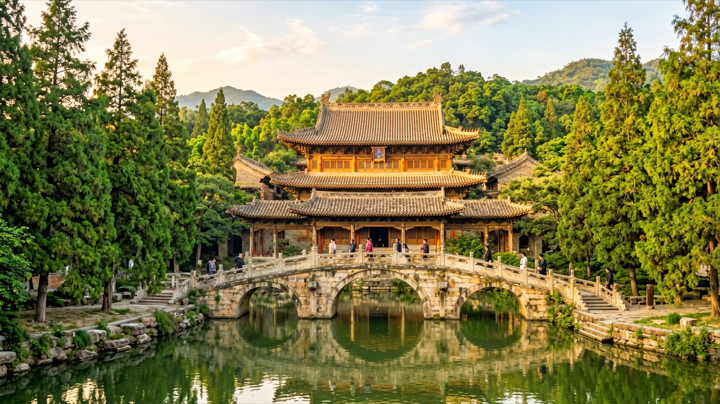
Jinci Temple Museum (Jinci Miao)
A 1,500-year-old Song-dynasty temple complex 25 km southwest of central Taiyuan, dedicated to Tang Shuyu (the ancient founder of the State of Jin) and the Tang-era hero Tang Jian. The temple is famous for three Song-era architectural wonders: the Shengmu Hall (the only surviving Tang-era female-statue hall in China, with 44 Song-era painted clay maidservant figures), the Flying Bridge Over the Fish Pond (鱼沼飞梁, the only Chinese wooden cross-shaped bridge from the Song dynasty), and the Zhou Cypress and Tang Locust Tree (the 3,000-year-old Zhou dynasty cypress). The park pairs with the Jinci Museum and the Jinci Tianlong Mountain area.
Buy tickets online for 5% off. Allow 3-4 hours. The Tang-era maidservant statues are the most-photographed - allow 30 min just in Shengmu Hall. Combine with the Tianlongshan Grottoes for a full-day western-mountain loop.
Shanxi Museum
Shanxi's provincial museum, opened 2014 in central Taiyuan, one of China's newest large-scale museums and the only one with a curated focus on the 5,000-year Shanxi cultural heritage. The collection includes the Jin-merchant-era silver bullion from Pingyao, the 1,400-year-old Sui-dynasta Sakyamuni statue, the 2,000-year-old Marquis of Dai's jade burial suit, the Northern Qi tomb murals, and the 1,000-year-old Liao-dynasty stone-carved funerary art. The Bronze Museum branch (Shanxi Bronze Museum) is the same complex.
Free entry with ID card. Closed Mondays. The audio guide (20 RMB) is recommended for the jade suit and the bronze gallery. Pair with a half-day visit to the Shanxi Grand Theater next door.
Donghu Vinegar Garden (Donghu Cu Yuan)
A working 1,000-year-old Shanxi aged-vinegar factory turned cultural tourist destination in eastern Taiyuan, the only large-scale vinegar museum in China. The 1,000-mu park has the original 1,000-year-old wooden fermentation tanks (the only ones in China still using hand-made vinegar), the vinegar-bath foot-pool, the 100-variety vinegar-tasting bar, the 100-meter traditional-vinegar brewing workshop, and the vinegar-museum exhibition hall. The Shanxi aged-vinegar is one of China's four most-famous vinegars (with Zhenjiang, Baoning, and Fujian).
Free entry. The vinegar-tasting bar has 30+ varieties from 5-year-old to 50-year-old. The vinegar-bath foot-pool (in the central park) is the most-photographed experience. Allow 3 hours.
Tianlongshan Grottoes (Tianlong Shan Shiku)
A 1,500-year-old Northern-Qi (557 AD) and Tang-dynasty Buddhist cave complex carved into the western cliff 30 km southwest of Taiyuan. The 25 caves contain 1,500+ Buddhist sculptures, the most-photographed being Cave 8's Tang-era Sakyamuni Bodhisattva and the 14th-century Yuan-era flying-devotional Bodhisattva relief. The caves were damaged during WWII and the late Cultural Revolution but have been progressively restored since 2005.
Combine with Jinci Temple for a half-day western-mountain loop. The Jinci Tianlong Mountain ticket combo is 100 RMB. The famous Tang-era flying Bodhisattva is the highlight - visit Cave 14 first.
Mengshan Grand Buddha (Mengshan Dafo)
A 66-meter-tall Tang-dynasty standing Buddha carved into the western cliff 20 km northwest of Taiyuan, one of the largest pre-modern stone Buddhas in China. The original Tang-era Buddha was destroyed in the late-Ming period, and the current statue was reconstructed in 2007 with the original Tang-style head reattached. The cliff-walk to the base passes 12 small grottoes, the largest being the 9-meter Maitreya. The 1-hour climb is a great morning activity.
Climb early morning (08:00) to avoid the heat. The cable car (50 RMB round-trip) saves 1 hour. Allow 3 hours for the full climb and back.
China Coal Museum
The national coal-mining museum, located in central Taiyuan, the only national-level coal museum in China. The 4A museum has the 4-floor exhibition hall with 10,000 years of coal-mining history, the simulated underground coal-mine tour (where visitors can ride the 1:1 mining-cart through a re-created mine tunnel), and the coal-miners' memorial hall. The 2,687 Trip.com reviews rank it the top-rated Taiyuan indoor attraction.
The underground simulated-mine tour is the highlight. Allow 2.5 hours. Children under 8 not admitted to the underground tour.
Liuxiang Food & Shopping Street (Liuxiang Buluo)
The 1,000-meter historical shopping and food street in central Taiyuan, the most-visited tourist destination in the city (4.6/5, 1,621 Trip.com reviews). The street runs from the Drum Tower west to the Bell Tower, lined with knife-cut-noodle houses, the 100-year-old Liu-xiang cloth shops, the Shanxi-featured crafts stores, and the night-time snack stalls. The intersection with Shipin Street is the city's food-nerve-center.
Best evening (18:00-22:00) for the night-time street food. Try the local knife-cut noodles at any of the 30+ family restaurants. The Bell-Tower intersection has the most-photographed city view.
Taiyuan Zoo & Northern Qi Murals Museum
The Taiyuan Zoo in the western mountains, the most-photographed family destination in the city (4.3/5, 4,034 reviews), paired with the 1,400-year-old Northern Qi Dynasty Mural Museum (北齐壁画博物馆) in the southern cave. The zoo has giant pandas, Siberian tigers, the primate center, and the 1-km safari section. The museum (free entry) houses the restored 1,400-year-old Northern Qi royal tomb murals originally from the Wangma-Kang tomb in central Taiyuan.
Combine zoo and museum for a half-day. Take Metro Line 6 to Taiyuan Zoo station. The panda enclosure (open 09:00-17:00) is the most popular. The Northern Qi murals (free) are the most-photographed art-history stop.
Local Flavors
What to Eat in Taiyuan
Taiyuan Knife-Cut Noodles (Dao Xiao Mian)
Taiyuan's signature street food - hand-cut noodles shaved directly from a dough block into a boiling pot, served in a clear broth with pork, cabbage, and egg. The technique produces 200+ thin noodle strips per minute. The 1,000-year-old recipe is the soul of Taiyuan's identity. Found at every Liuxiang and Shipin Street noodle house.
Recommended: Renmin Biyuan (人民便利) on Liuxiang, or any Shipin Street vendor
Over-Oil Meat (Guo You Rou)
A Shanxi specialty - thin-sliced pork tenderloin dipped in flour and egg-white, then deep-fried in vinegar-sugar sauce. The result is tender inside, crispy outside, with the vinegar-caramel glaze. A 1,000-year-old Shanxi imperial-court recipe, found at every Taiyuan restaurant.
Recommended: Laocheng Yifu (老城一味) on Liuxiang, or Renmin Biyuan (人民便利)
Taiyuan Tou-Nao (Fushan Tou-Nao)
A 400-year-old Taiyuan breakfast soup - mutton and yellow-rice wine stewed with astragalus root, Chinese yam, lotus root, and aged vinegar, served with a side of pickled vegetables. The original recipe was created by the Ming-dynasty doctor Fu Shan to cure his mother's cold. Found at the old Yinzhuang Tou-Nao and the morning-market vendors.
Recommended: Yinzhuang Tou-Nao (益庄头脑) on Yinzhuang Street, or Renmin Biyuan (人民便利)
Mutton Soup with Mian Tiao (Mutton Miantiao)
A Taiyuan street favorite - clear mutton broth with hand-rolled wide noodles, lamb slices, cilantro, and aged vinegar. The classic Taiyuan cold-weather meal, served with the city's signature aged vinegar in the broth. Found at every morning market and the Liuxiang night-time stalls.
Recommended: Any Liuxiang night market vendor, or Renmin Biyuan (人民便利)
Shanxi Aged Vinegar (Shanxi Lao Chen Cu)
Shanxi's most-iconic condiment - a 1,000-year-old aged black vinegar made from sorghum, barley, and peas, fermented in wooden tanks for 6-24 months. The vinegar is essential to Shanxi cuisine and is sold at every supermarket. The best 8-year-old vinegar is a 50 RMB bottle; the 30-year-old is 200 RMB. Found at the Donghu Vinegar Garden store and every supermarket.
Recommended: Donghu Vinegar Garden store, or the local Shanxi Vinegar Industry shop on Shipin Street
Liu Wei Zhai Sauce Meat (Liu Wei Zhai Jiang Rou)
A 1,500-year-old Taiyuan traditional cold-cut - pork, beef, and liver cured in a Shanxi aged-vinegar-based marinade for 5-7 days, then steamed and served cold. The original Liuwei Zhai (Six-Flavor Workshop) is the most-photographed cold-cut shop in Taiyuan, with the Tianlongshan Cave flavor still applied.
Recommended: Liuwei Zhai (六味斋) on Liuxiang - the 1,500-year-old flagship store
Curated Itineraries
Suggested Routes in Taiyuan
Taiyuan Cultural 1-Day Trip
A 1-day trip covering Jinci Temple, the Shanxi Museum, and the Donghu Vinegar Garden. Best year-round; in winter the Liuxiang food street is the most-photographed.
Taiyuan + Western Mountains 2-Day Trip
A 2-day trip covering the cultural sites (Jinci, Shanxi Museum) plus the Tianlongshan Caves and the Mengshan Grand Buddha. Best April-October; in winter the Liuxiang food street is the highlight.
Taiyuan + Datong + Mount Wutai 4-Day Trip
A 4-day Shanxi north loop - 1 day in Taiyuan, 2 days in Datong (Yungang Grottoes + Huayan Temple + Datong Ancient City), 1 day at Mount Wutai. The most-popular first-time Shanxi itinerary.
Trip Planning
Travel Budget for Taiyuan
Transport
Dining
Attractions
Accommodation
Total estimated budget: $214 per person
Actual costs vary by travel style, season, and booking choices.
Common Questions
Taiyuan Travel FAQ
What is the best time to visit Taiyuan?
Apr-Jun, Sep-Oct is generally the best season, with comfortable weather for sightseeing and outdoor activities.
How many days are recommended for Taiyuan?
2 days is a practical baseline for first-time visitors covering major highlights.
What is a typical travel budget in Taiyuan?
A common reference is around $214 per person, depending on hotel level, transport, and attraction choices.
Is Taiyuan suitable for family travel?
Yes. Taiyuan has diverse attractions, flexible route options, and accommodation levels suitable for family trips.
More Walk Voyage
Explore Other China Cities
Continue your journey through China with our other curated city guides — pandas, hot pot, karst landscapes, classical gardens, and more.
Sichuan
Chengdu / 成都
Pandas, teahouses, Sichuan hot pot, and slow urban living in the Land of Abundance.
Explore Chengdu →
Chongqing
Chongqing / 重庆
A dramatic mountain city of hot pot, rivers, night views, and layered urban streets.
Explore Chongqing →
Jiangsu
Suzhou / 苏州
Classical gardens, canal streets, silk culture, and quiet Jiangnan elegance.
Explore Suzhou →
Hunan
Changsha / 长沙
Bold street food, riverside nightlife, museums, and youthful city energy.
Explore Changsha →
Zhejiang
Shaoxing / 绍兴
Lu Xun's hometown, ancient calligraphy capital, and home of China's iconic yellow wine.
Explore Shaoxing →
Jiangxi
Jiujiang / 九江
Yangtze-side gateway to UNESCO Mount Lu, Poyang Lake wetlands, and one of China's most atmospheric old riverfronts.
Explore Jiujiang →
Shandong
Qingdao / 青岛
Red-tile harbor city on the Jiaodong Peninsula, home of Tsingtao beer, the holy Taoist mountain of Laoshan, and a 19th-century German concession old town.
Explore Qingdao →
Hebei
Zhangjiakou / 张家口
Historic gateway between the North China plain and the Mongolian steppe, 2022 Winter Olympics co-host, and starting point of the famous Grassland Sky Road drive.
Explore Zhangjiakou →
Fujian
Xiamen / 厦门
Walkable island city on the Taiwan Strait, paired with the UNESCO World Heritage piano island of Gulangyu, Minnan street food, and the 1,300-year Quanzhou West Street.
Explore Xiamen →
Heilongjiang
Harbin / 哈尔滨
19th-century Russian-built city on the Songhua River, home of the world-famous Ice and Snow Festival, Central Avenue, Saint Sophia Cathedral, and the Siberian Tiger Forest Park.
Explore Harbin →
Liaoning
Dalian / 大连
Harbor city on the southern tip of the Liaodong Peninsula, home of Jinshitan Golden Pebble Beach, Laohutan Ocean Park, the 32-km Binhai Road, and Bohai seafood.
Explore Dalian →
Sichuan
Aba (Tibetan & Qiang) / 阿坝
Western Sichuan highland prefecture, home of UNESCO Jiuzhaigou and Huanglong, Mount Siguniang, the Ruoergai grasslands, and the rich Qiang and Tibetan ethnic cultures.
Explore Aba (Tibetan & Qiang) →
Guangdong
Zhuhai / 珠海
A relaxed coastal city for islands, seafood, family attractions, and sea views.
Explore Zhuhai →
Guangdong
Shenzhen / 深圳
China's tech-capital megalopolis with the OCT theme park cluster, the 599m Ping An Finance Center, and Greater Bay Area coastal escapes.
Explore Shenzhen →
Hebei
Qinhuangdao / 秦皇岛
Seaside escapes, the Great Wall by the sea, beaches, and northern coastal scenery.
Explore Qinhuangdao →
Guangxi
Guilin / 桂林
World-famous karst landscapes along the Li River, ancient Yangshuo streets, terraced rice fields, and timeless Guangxi scenery.
Explore Guilin →
Yunnan
Kunming / 昆明
Yunnan's 'Spring City' capital at 1,891 m, the gateway to the UNESCO Stone Forest, the 330 km2 Dianchi Lake, and the entire Yunnan travel network.
Explore Kunming →
Yunnan
Dali / 大理
The Bai minority old capital between the 4,122 m Cangshan Mountain and the 250 km2 Erhai Lake, the mid-point of the classic Yunnan route.
Explore Dali →
Yunnan
Lijiang / 丽江
The UNESCO 800-year-old Naxi old town at 2,400 m, the gateway to the 5,596 m Yulong Snow Mountain, the Tiger Leaping Gorge, and the Mosuo Lugu Lake.
Explore Lijiang →
Hebei
Chengde / 承德
The Qing-dynasty summer capital with the UNESCO Mountain Resort (Bishu Shanzhuang), the 12 surviving Outer Temples, the Jinshanling Great Wall, and the Bashang plateau grasslands.
Explore Chengde →
Hebei
Shijiazhuang / 石家庄
Hebei's capital city with the 1,600-year-old Zhengding Ancient City, the Song-dynasty Longxing Temple, the UNESCO-tentative Zhaozhou Bridge, and the Taihang mountain escapes.
Explore Shijiazhuang →
Shanxi
Datong / 大同
Northern Wei capital on the Great Wall frontier, home of the UNESCO Yungang Grottoes (252 caves, 51,000+ statues), the Liao-dynasty Huayan Temple, the Hanging Temple, and the reconstructed Ming city wall.
Explore Datong →
Shanxi
Shuozhou / 朔州
Northern Shanxi frontier city in the historic Dai County region, home of the 1,000-year-old Yingxian Wooden Pagoda (the world's tallest surviving all-wood pagoda at 67.31 m, built without nails in 1056).
Explore Shuozhou →
Shanxi
Xinzhou / 忻州
Northern Shanxi prefecture, gateway to two UNESCO sites: the sacred Buddhist Mount Wutai (47 active temples, Tang-era Foguang Temple) and the strategic Ming-Great-Wall Yanmen Pass on the ancient frontier.
Explore Xinzhou →
Shanxi
Lvliang / 吕梁
Western Shanxi's Yellow-River-side prefecture, home of the 5A Qikou Ancient Town on the Yellow River, the Loess Plateau cave dwellings, and the 2,800-year-old Mian Mountain battlefield.
Explore Lvliang →
Shanxi
Jinzhong / 晋中
Heart of the historic Jin (Shanxi) merchant country, home of the UNESCO Pingyao Ancient City (2,800-year-old Ming-Qing walled town), the Qiao Family Compound, the Mianshan Mountain, and the Zhangbi Ancient Fortress.
Explore Jinzhong →
Shanxi
Yangquan / 阳泉
Eastern Shanxi city at the foot of the Taihang Mountains, gateway to the 5A Cang Mountain, the historic Niangzi Pass (one of the Great Wall's nine strategic passes), and the Lutou Mountain.
Explore Yangquan →
Shanxi
Changzhi / 长治
Southeastern Shanxi gateway to the 5A Taihang Mountain Grand Canyon, the historic Shangdang region, the ancient Licheng walled town, and the famous Changzhi donkey meat and Lucheng hand-shaken pie.
Explore Changzhi →
Shanxi
Jincheng / 晋城
Southeastern Shanxi city on the Taihang edge, home of the 5A Huangcheng Xiangfu (the 300-year-old Chen Family Mansion, 'House of the Emperor'), Wangmangling's spectacular Taihang cliffs, and the Qing-era temple clusters.
Explore Jincheng →
Shanxi
Linfen / 临汾
Southern Shanxi cradle of Yao and Shun Chinese-civilization mythology, home of the 5A Yellow-River Hukou Waterfall (China's second-largest waterfall), the Hongdong Locust-Tree ancestral park, and the Xiaoxitian Buddhist grottoes.
Explore Linfen →
Shanxi
Yuncheng / 运城
Southernmost Shanxi city on the Yellow River, home of the 5A Salt Lake (one of the world's three inland salt lakes), the 700-year-old Yongle Palace murals, the 5A Guandi Temple, and the 6,000-year-old Houma bronze civilization.
Explore Yuncheng →
Shandong
Yantai / 烟台
Jiaodong Peninsula coastal city, home of the legendary Penglai Pavilion (one of China's Four Great Pavilions), the Changyu Wine Culture Museum (China's first industrial winery, 1892), the 40-island Changdao archipelago in the Bohai-Yellow Sea border, and the Jiaodong seafood tradition.
Explore Yantai →
Shandong
Jinan / 济南
Shandong's 2,500-year-old capital, the 'City of Springs' (Quancheng) with 720 named natural springs, the Baotu Spring (Number One Spring Under Heaven), the Shandong Museum, and the cradle of Lu cuisine (Jinan school).
Explore Jinan →
Shandong
Tai'an / 泰安
The gateway city to Mount Tai, the Eastern Sacred Mountain of China and UNESCO World Heritage, climbed by 72 emperors over 3,000 years. The 1,545-m Yuhuang Summit sunrise is the most-celebrated sunrise in China.
Explore Tai'an →
Shandong
Weihai / 威海
Coastal city on the eastern tip of the Shandong Peninsula, home of Liugong Island (the 1895 Sino-Japanese War memorial, the home of the Beiyang Fleet), the 40-km Huanhai Road coastal loop, the Rongcheng Swan Lake (winter Siberian swans), and the Korean-influenced food scene.
Explore Weihai →
Shandong
Zibo / 淄博
Central Shandong industrial and cultural city, the 2,000-year-old capital of the ancient Qi State, the 2023 viral Zibo small-pancake barbecue capital, and the home of the Zhoucun Ancient Commercial City and the Liaozhai City (Pu Songling memorial).
Explore Zibo →
Shandong
Qufu / 曲阜
Birthplace of Confucius in southwestern Shandong, with the UNESCO World Heritage Temple, Cemetery, and Mansion of Confucius (San Kong) - the 2,500-year-old ancestral complex of Confucianism, the Confucius Museum, and the Nishan Sacred Land.
Explore Qufu →
Shandong
Qingzhou / 青州
A 1,400-year-old ancient city in central Shandong, one of China's oldest continuously inhabited cities. Home of the Qingzhou Museum (with the 1996 Longxing Temple Buddhist statue discovery), the Yunmen Mountain cliff carving, and the Tuo Mountain Northern Wei grottoes.
Explore Qingzhou →
Shandong
Rizhao / 日照
Southern Shandong coastal city facing the Yellow Sea, with the 6-km Wanpingkou Beach (the most-sunrised beach in Shandong), the only coastal National Forest Park in China, the Dongyi Old Town, and the unique coastal 'sea of tea' plantations.
Explore Rizhao →
Shandong
Weifang / 潍坊
The world capital of kites in central Shandong, home of the Weifang International Kite Festival (April), the 1,500-year-old Shihu Garden, the Fangzi German-Japanese Old Town, the Bohai Eye spokeless ferris wheel, and the Yangjiabu New Year Painting village.
Explore Weifang →
Shandong
Linyi / 临沂
The largest city in Shandong (11+ million population) in the southeast, home of the 5A Mount Meng National Forest Park, the 2,000-year-old Yinqueshan Han Tomb Bamboo Slips (with the Sun Bin's Art of War), the Langya Ancient City, and the Wang Xizhi Former Residence.
Explore Linyi →
Shandong
Jining / 济宁
Home of Mencius in southwestern Shandong, with the 2,400-year-old Mencius Temple and Mansion in Zoucheng, the 1,000-year-old Baoxiang Temple with the 1,500-year-old underground palace, the Weishan Lake Red Lotus Wetland, and the Jining Canal Heritage.
Explore Jining →
Shandong
Dongying / 东营
Northernmost Shandong city on the Bohai Sea, home of the 5A Yellow River Delta National Park, the Red-Crowned Crane Sanctuary, the seasonal red-beach (red seepweed in October), and the Shengli Oilfield.
Explore Dongying →
Shandong
Zaozhuang / 枣庄
Southern Shandong city on the Grand Canal, home of the 5A Taierzhuang Ancient City (the most-celebrated living Grand Canal town), the 1938 Battle of Taierzhuang Memorial, the Weishan Lake Red Lotus Wetland, and the famous Zaozhuang spicy chicken.
Explore Zaozhuang →